
Urban Sketching Retreat in PRAGUE 2026
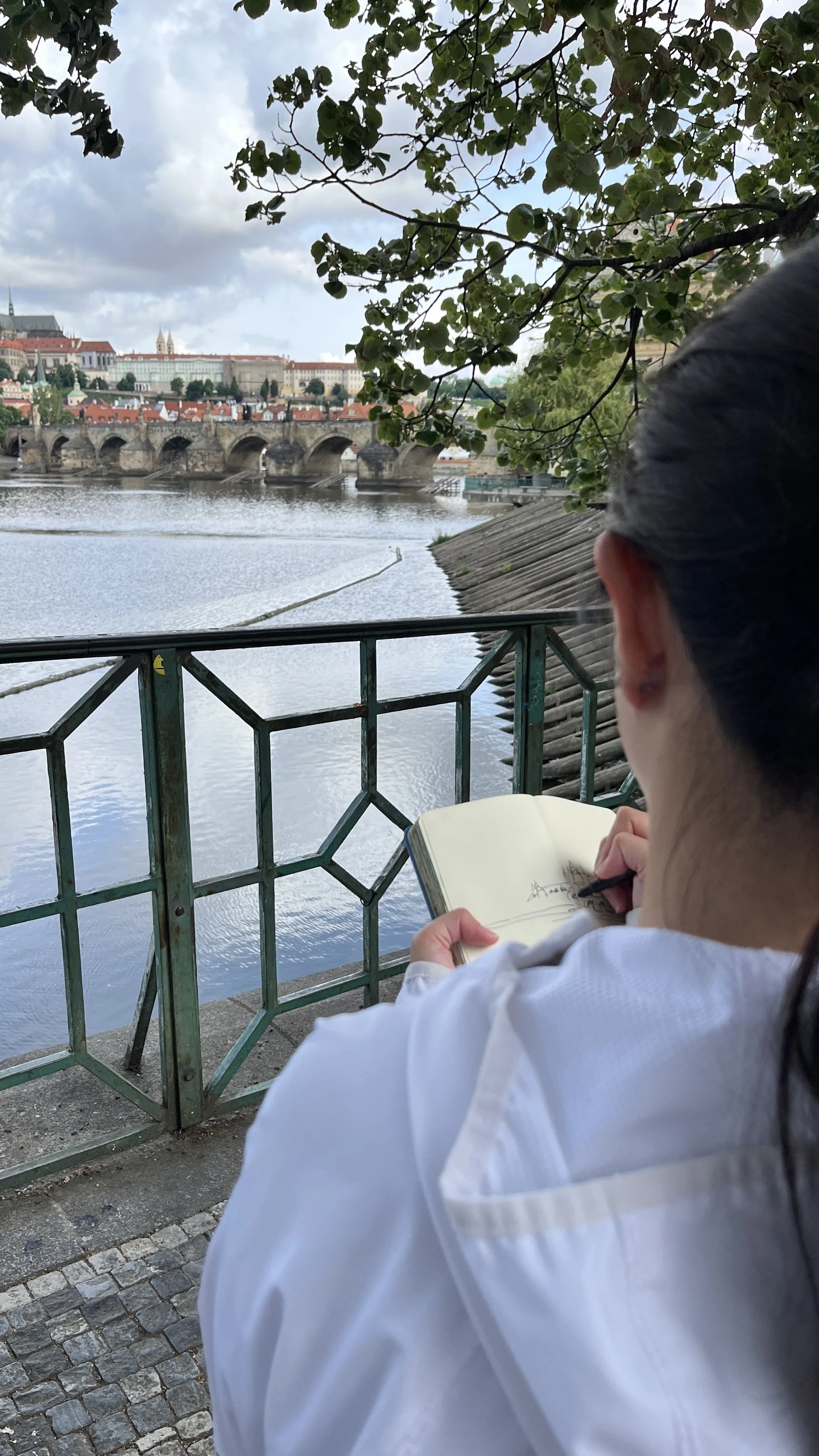
Picture this. You are sitting under a tree by the river. Live music drifts over from somewhere close. A light rain starts, then stops, and you keep painting. That was one moment from our 2026 Urban Sketching Retreat in Prague.
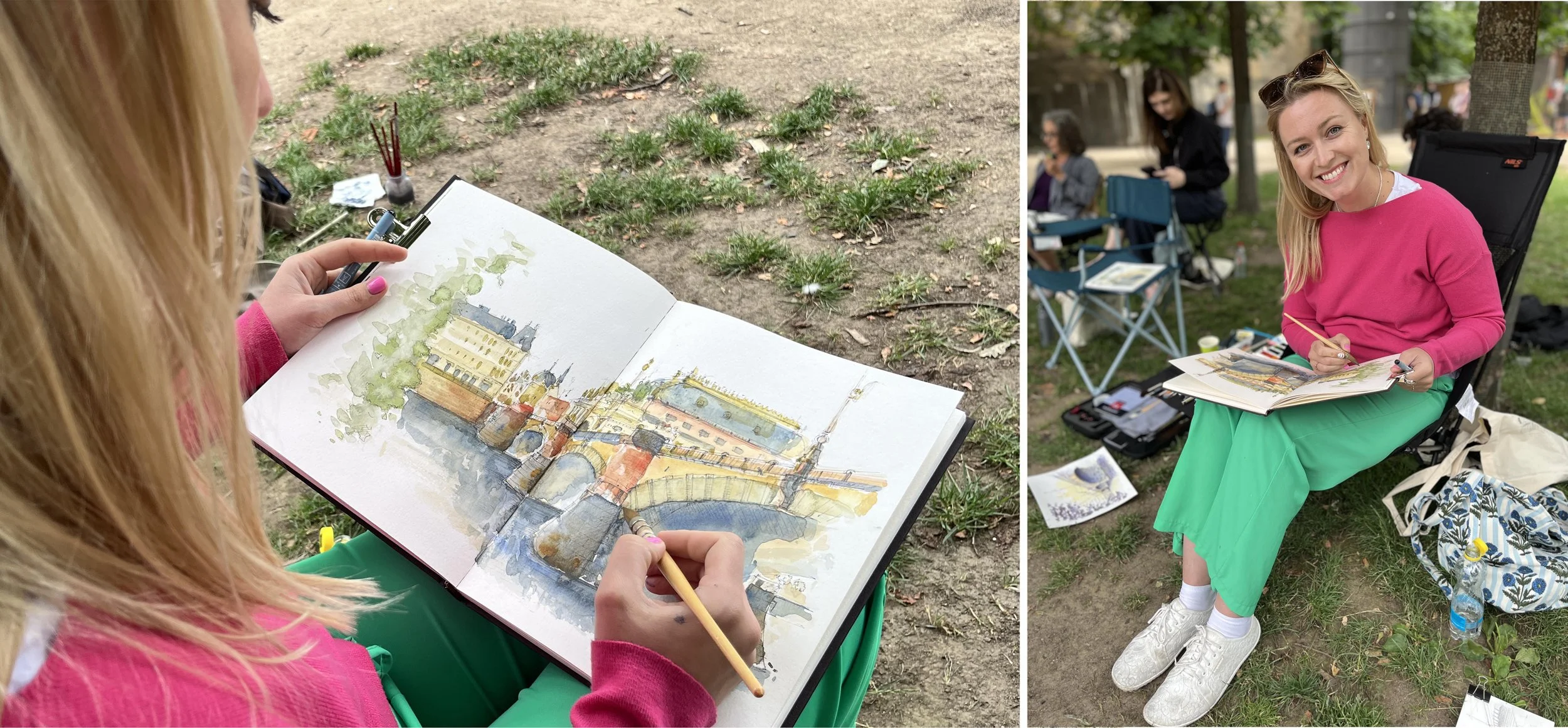
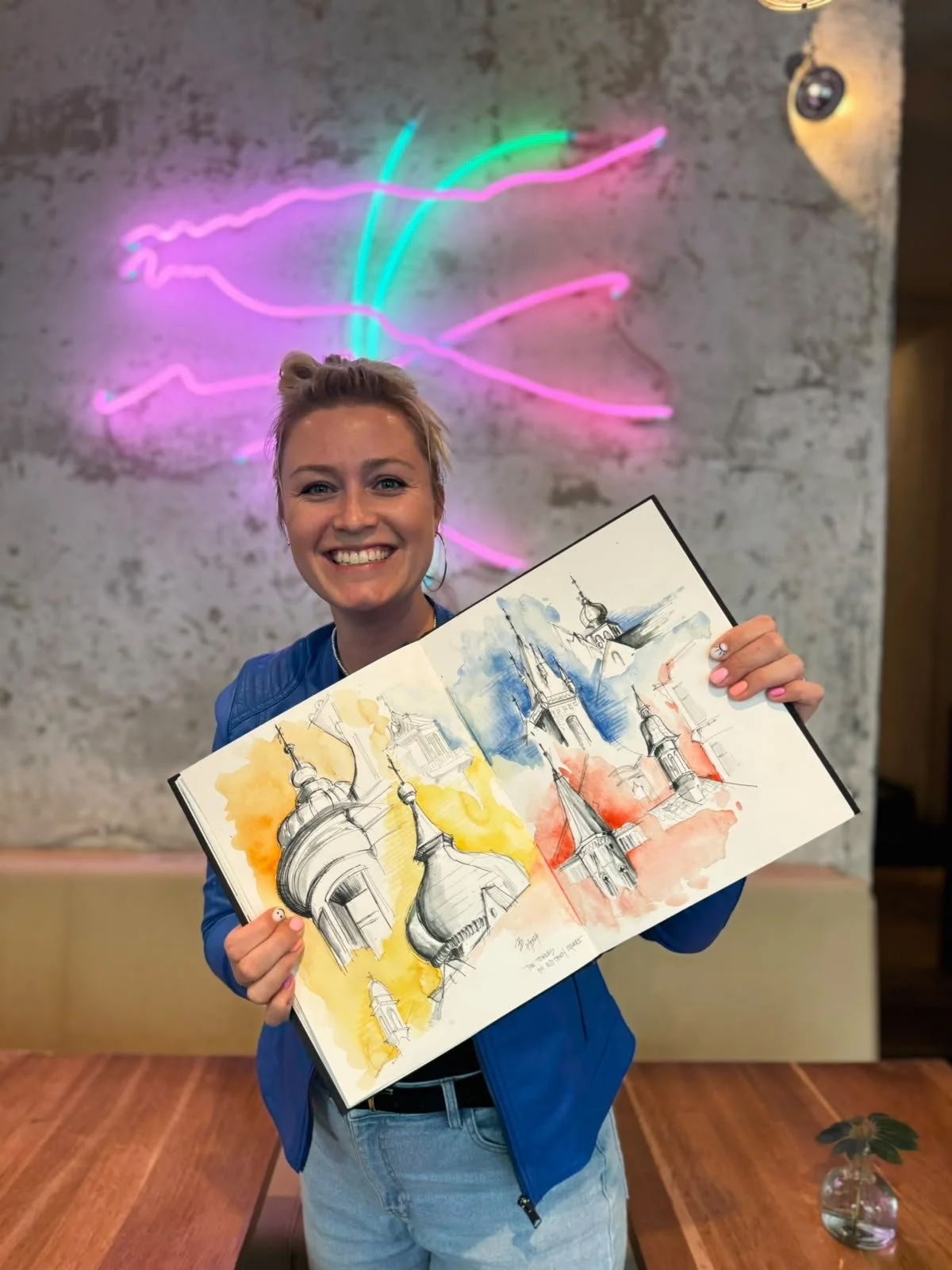
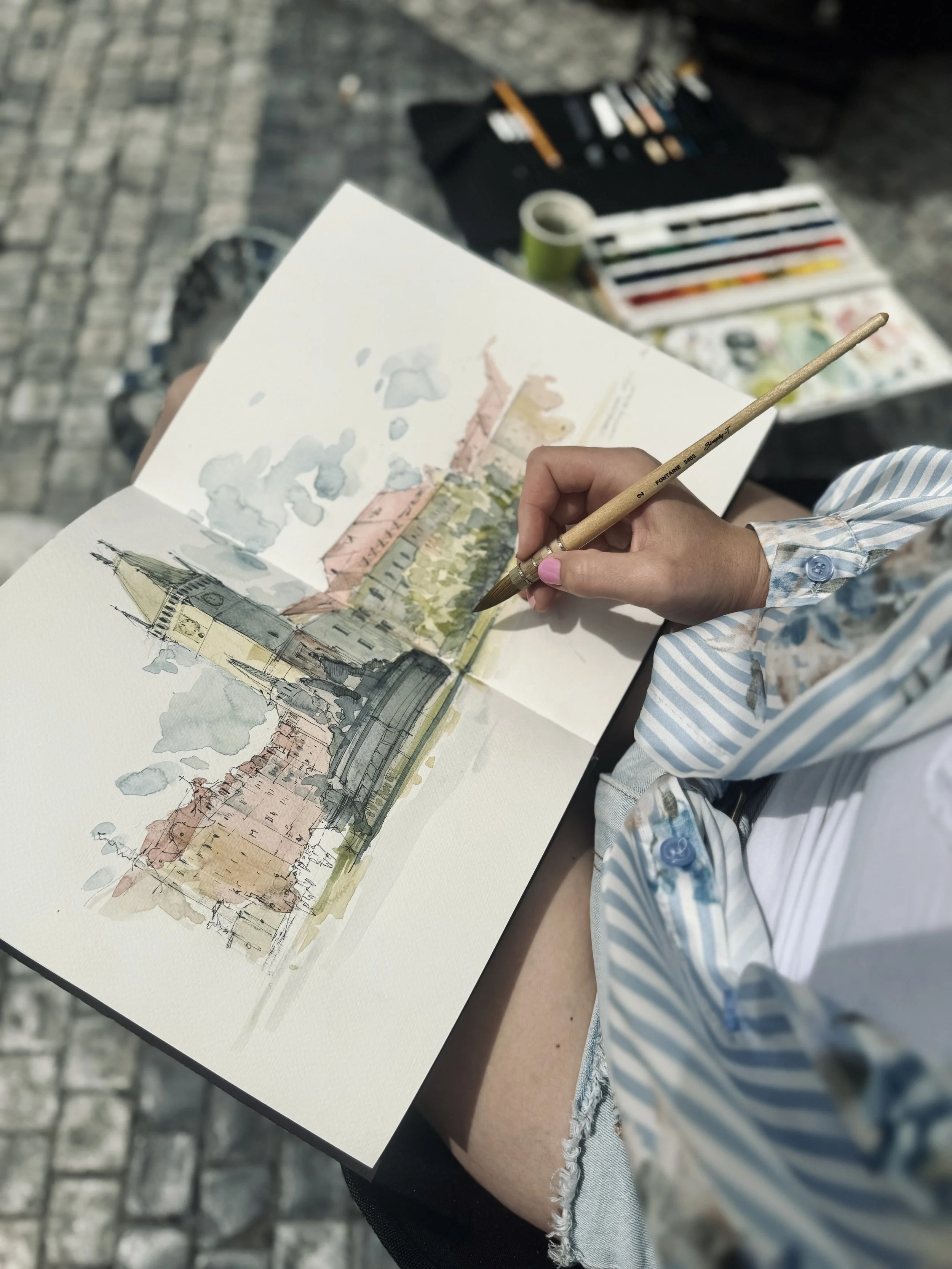
Our participant Barbora (https://www.instagram.com/skicujici_architektka/)
If you have ever wondered what an urban sketching retreat is really like, this post is for you. I will walk you through our week-long experience in Prague from July 2026. You will see where we drew, what we practiced, what went wrong, and the one thing that surprised me most.
Here is the short answer. What made this retreat special had little to do with talent or clean lines. It came from the time we made for ourselves and the people we met. The sketching got better on its own.
Before we go further, a quick gift. If you are new to this, grab my free Top 10 Tips on Architectural Sketching. It is a simple way to build early confidence. You may also like my free guide to the 7 types of perspective you should know, since perspective was one of our first lessons in Prague.
What is THE urban sketching retreat IN PRAGUE?
Our urban sketching retreat is a week-long experience of guided, on-location drawing where you sketch the beautiful city of Prague with a small group and learn as you go.
We have workshops both indoor and outdoor. In the morning you might sit indoors and learn a skill, like perspective or composition. Then you carry your sketchbook outside and draw the real world. You work next to people who love the same thing. Me and Alán Ramiro give you feedback on the spot. You do not need to be good yet. You just need to show up and try.
Who came to the Prague sketching retreat 2026?
This was our second year hosting the retreat with my friend, urban sketcher, and instructors Alán Ramiro from See The Lines.
(I wrote about the USk Retreat 2025 here).
Nine sketchers from around the world joined us for a week of walking, sketching, and good food in Prague. A small group, sketchbooks everywhere, and no one competing with anyone.
Prague is my home city. It is safe, very walkable, full of historic architecture and bridges, and kind to sketchers.
That group size matters. With nine people, no one hides in the back. Everyone gets help. And there is room for the quiet one-on-one talks that make a week like this stick with you for years.
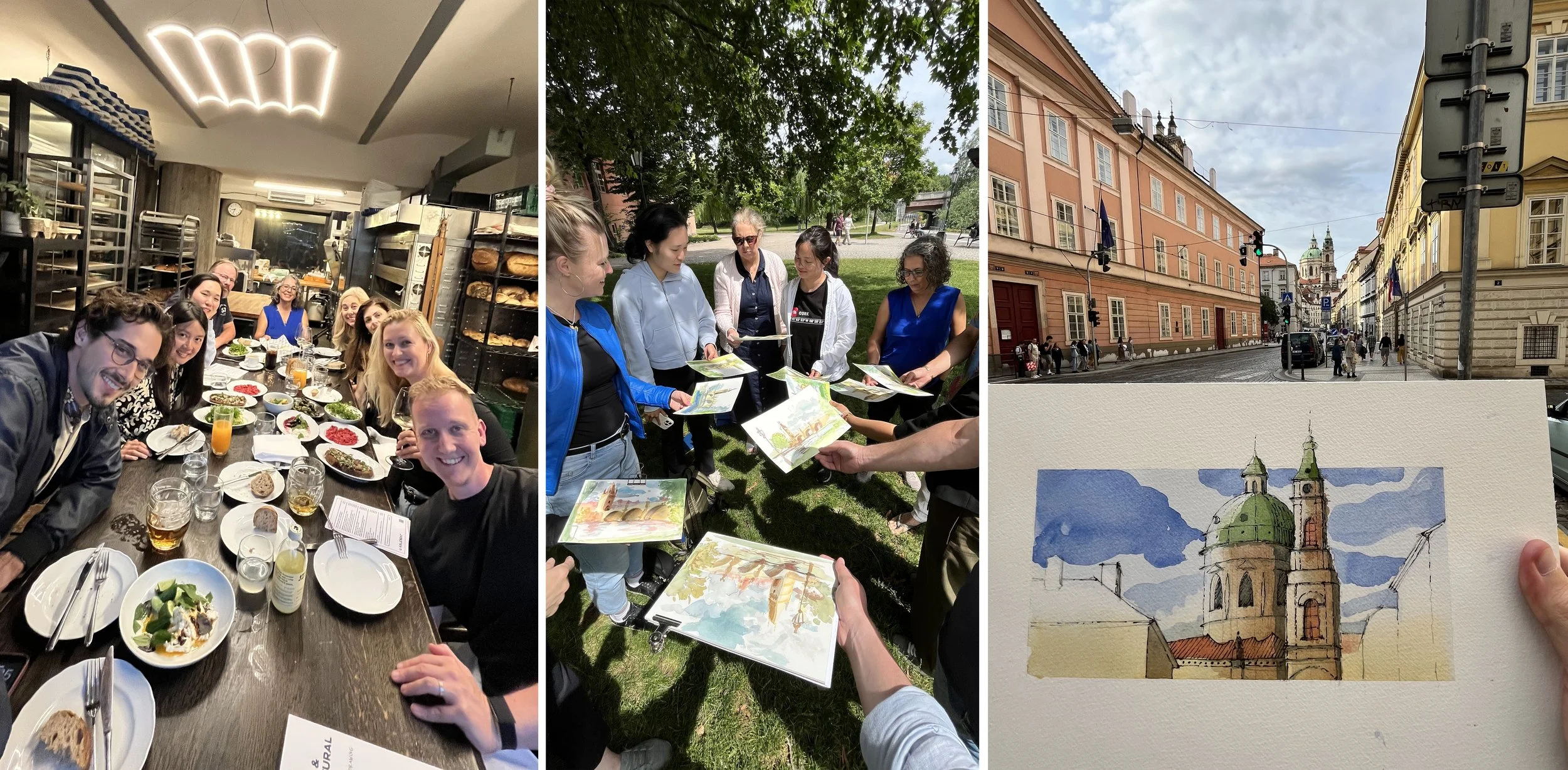
Where did we sketch across Prague?
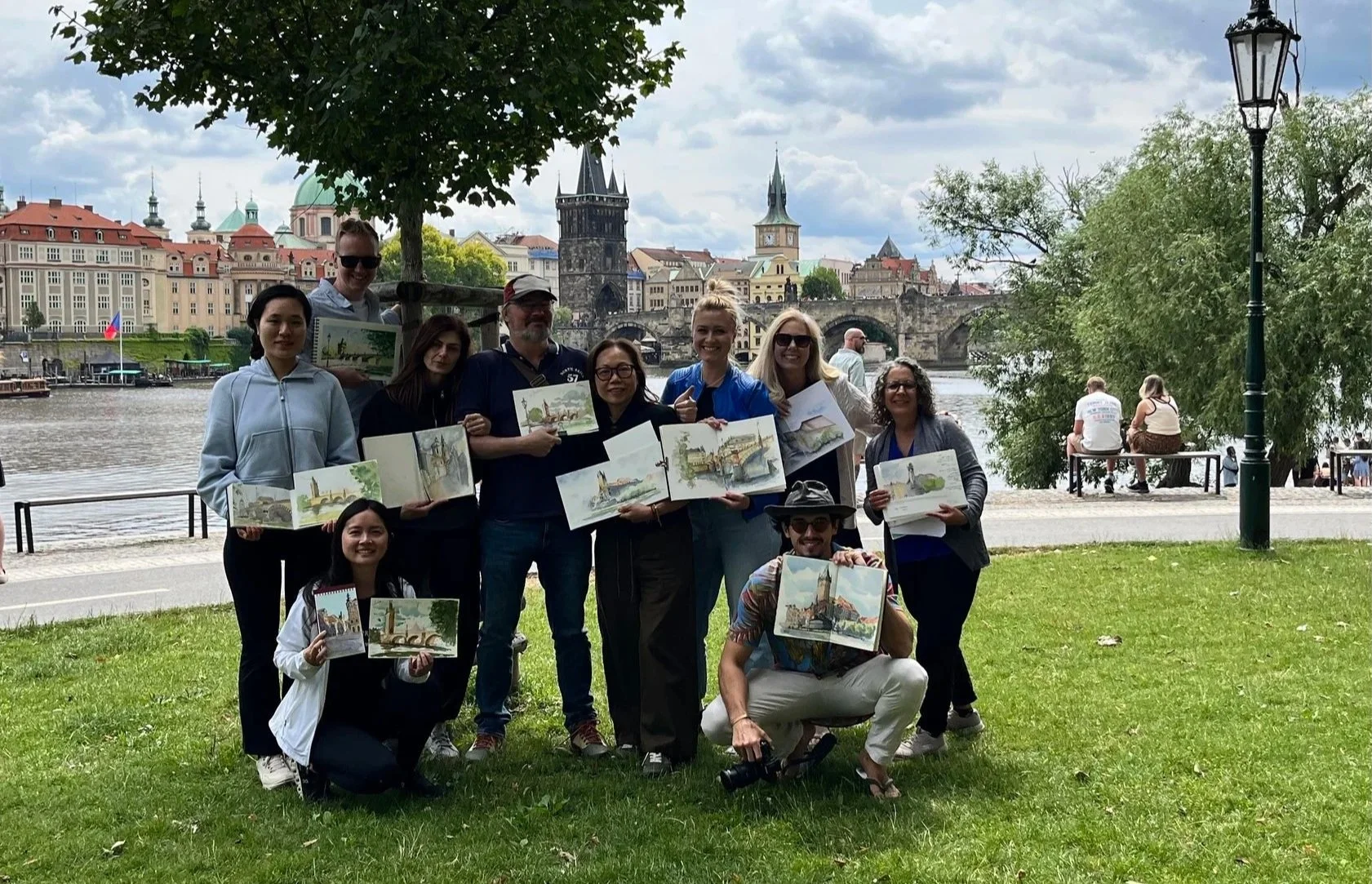
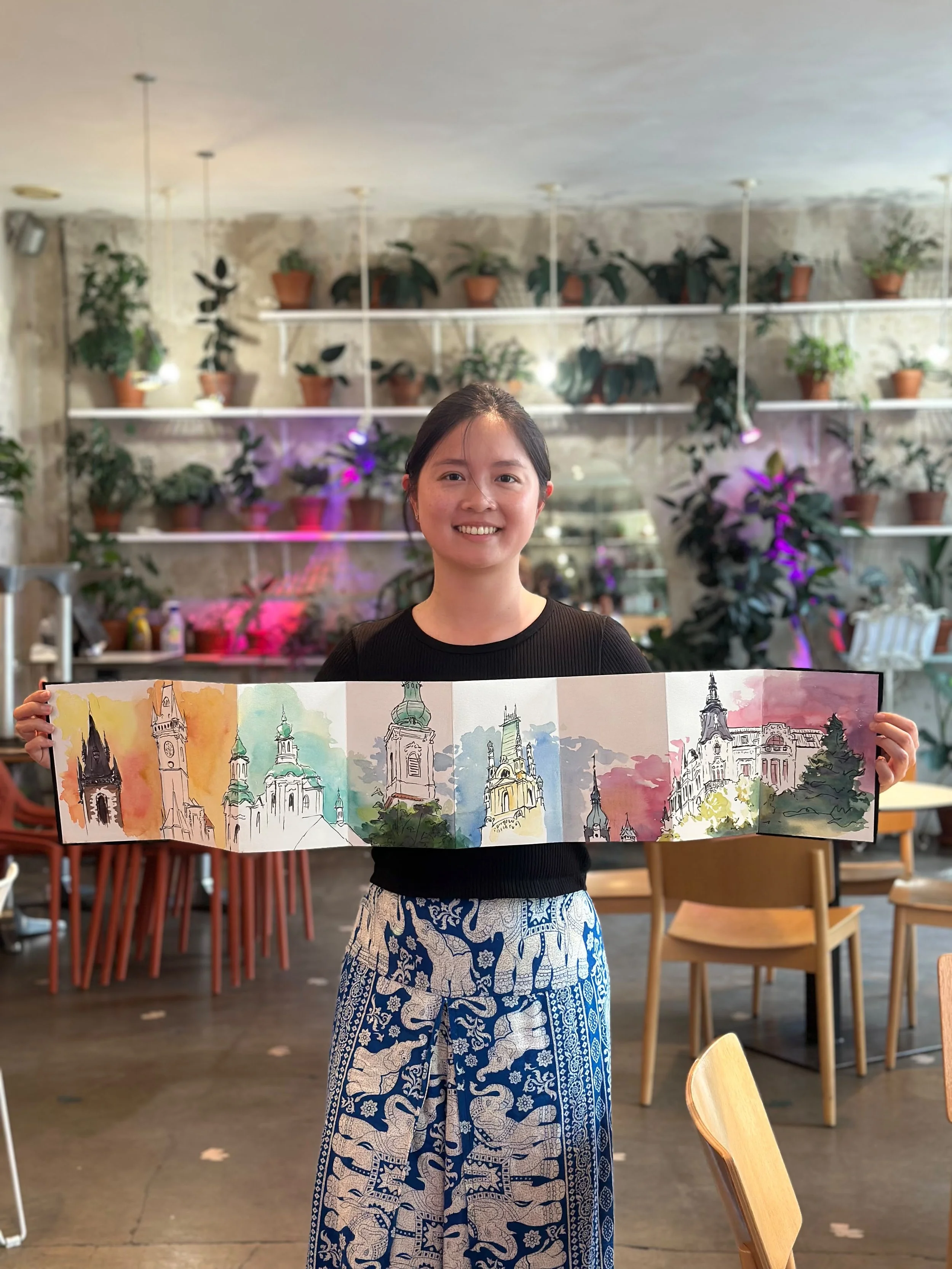
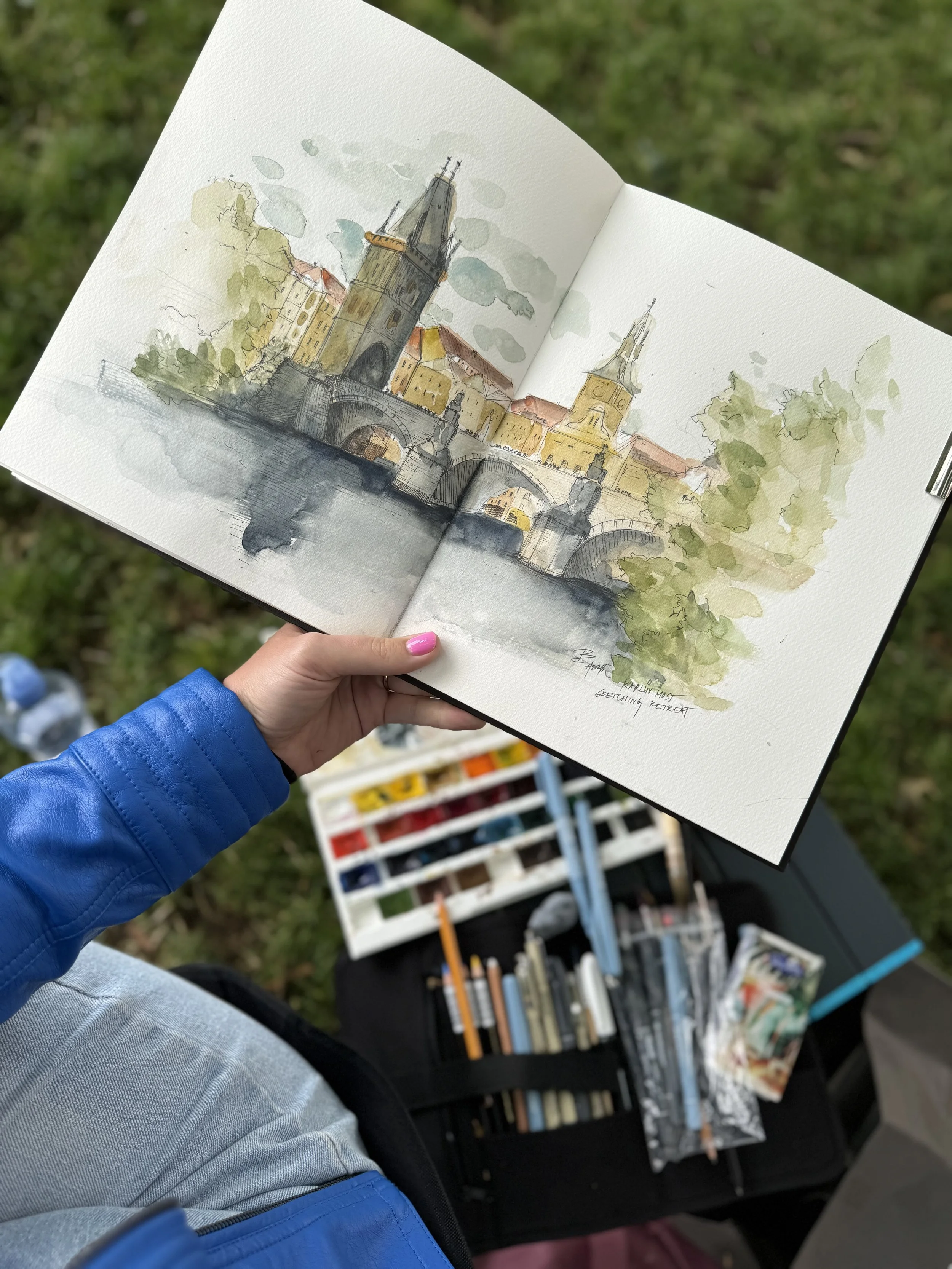
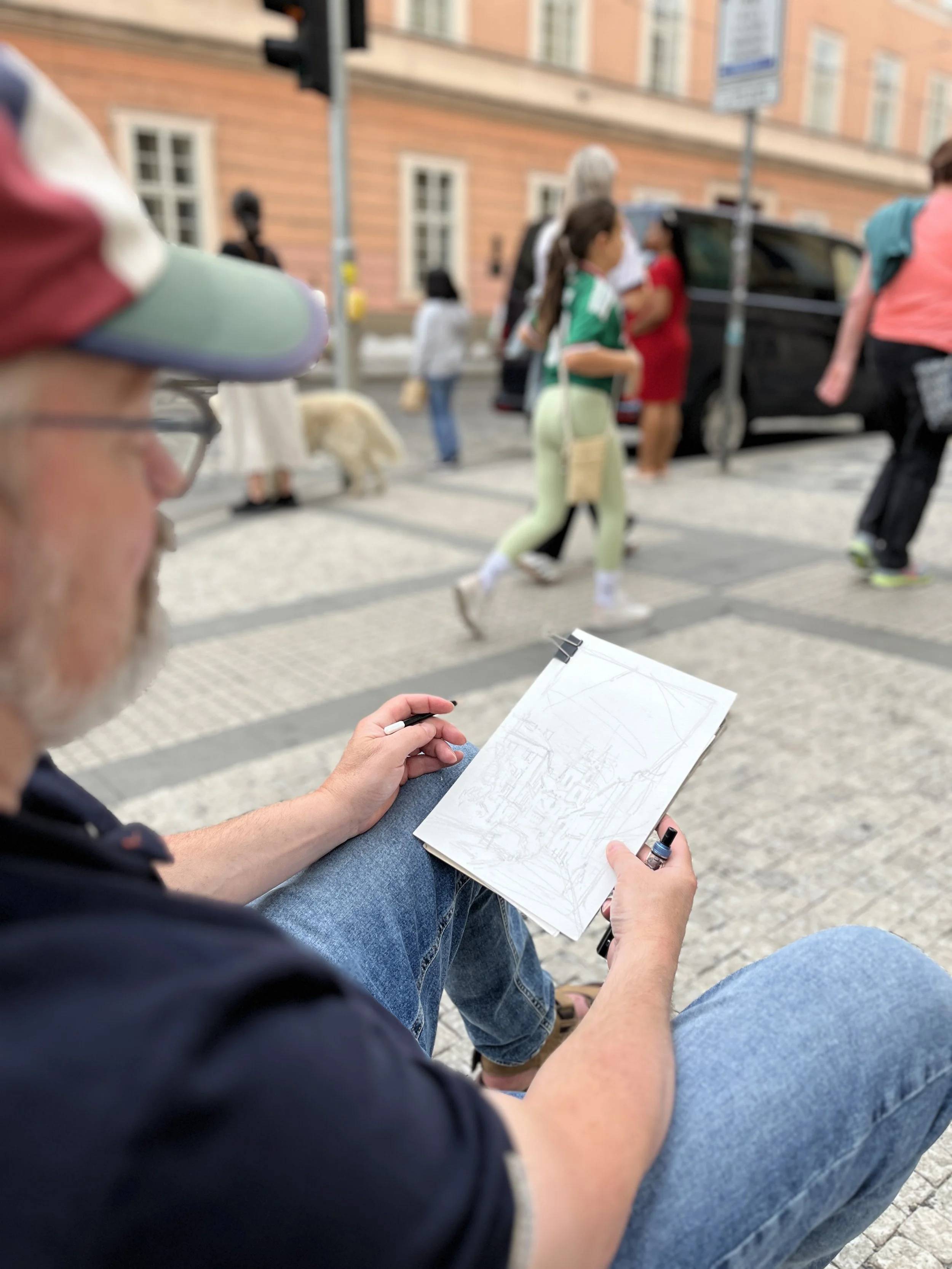
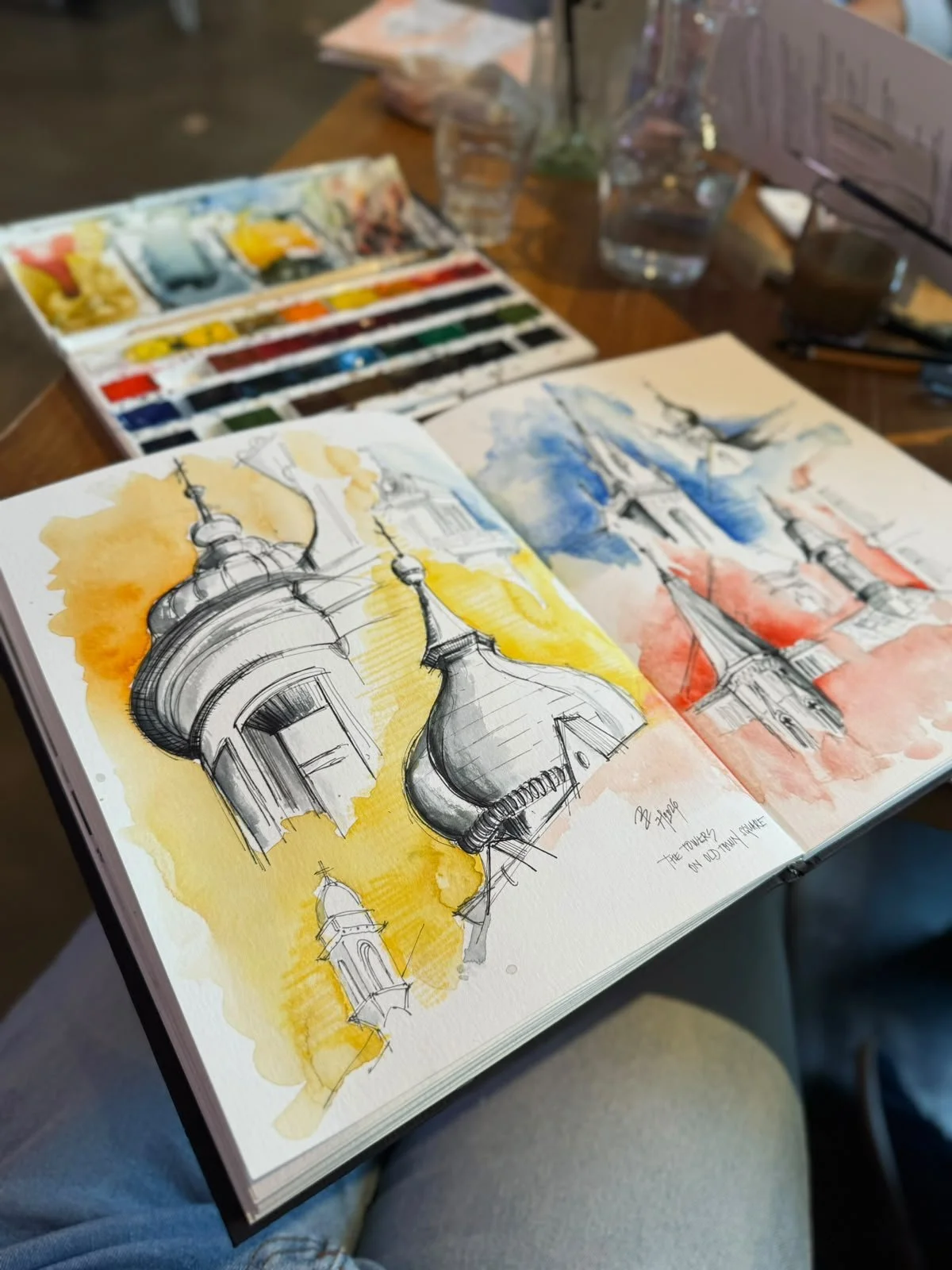
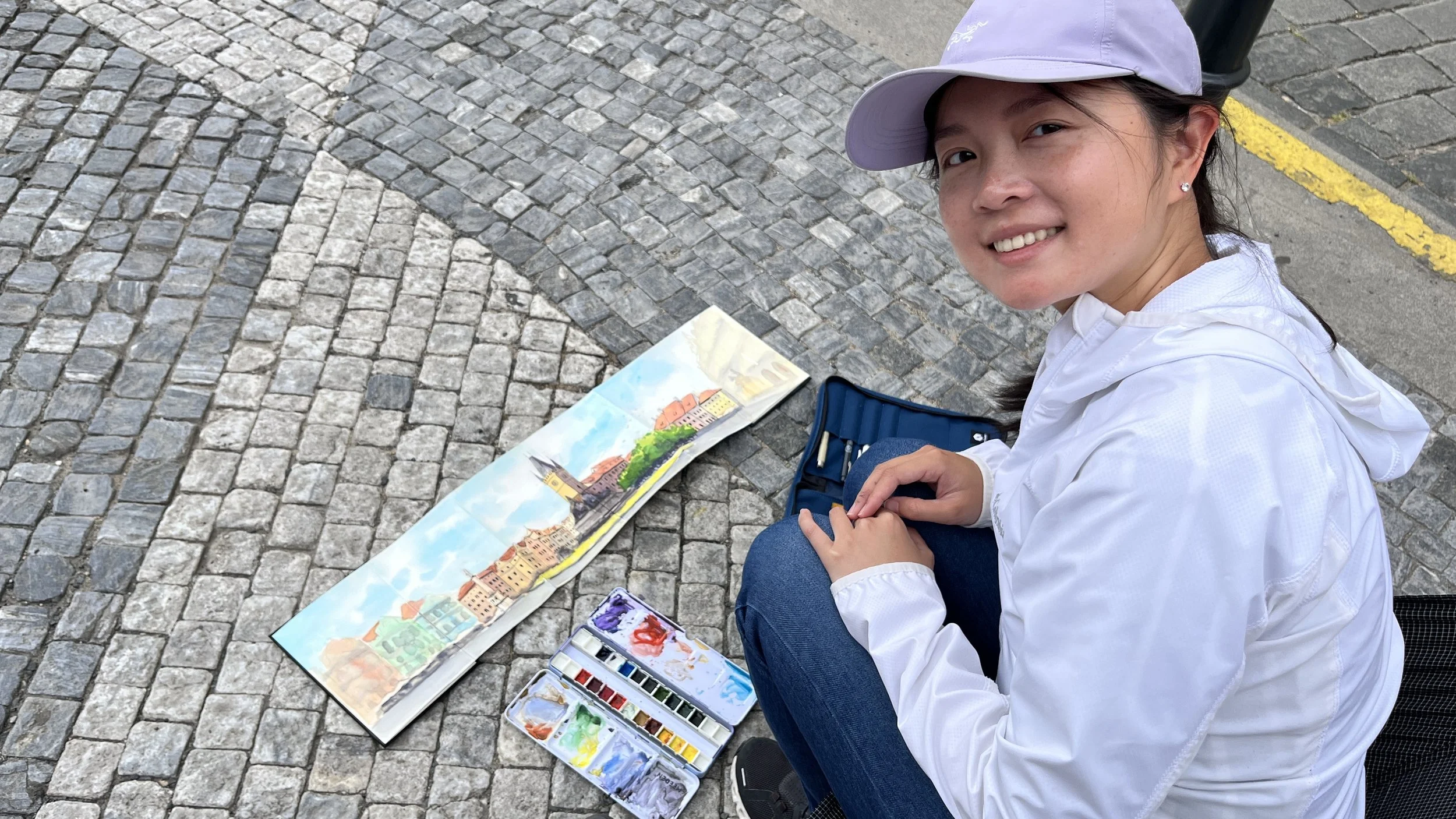
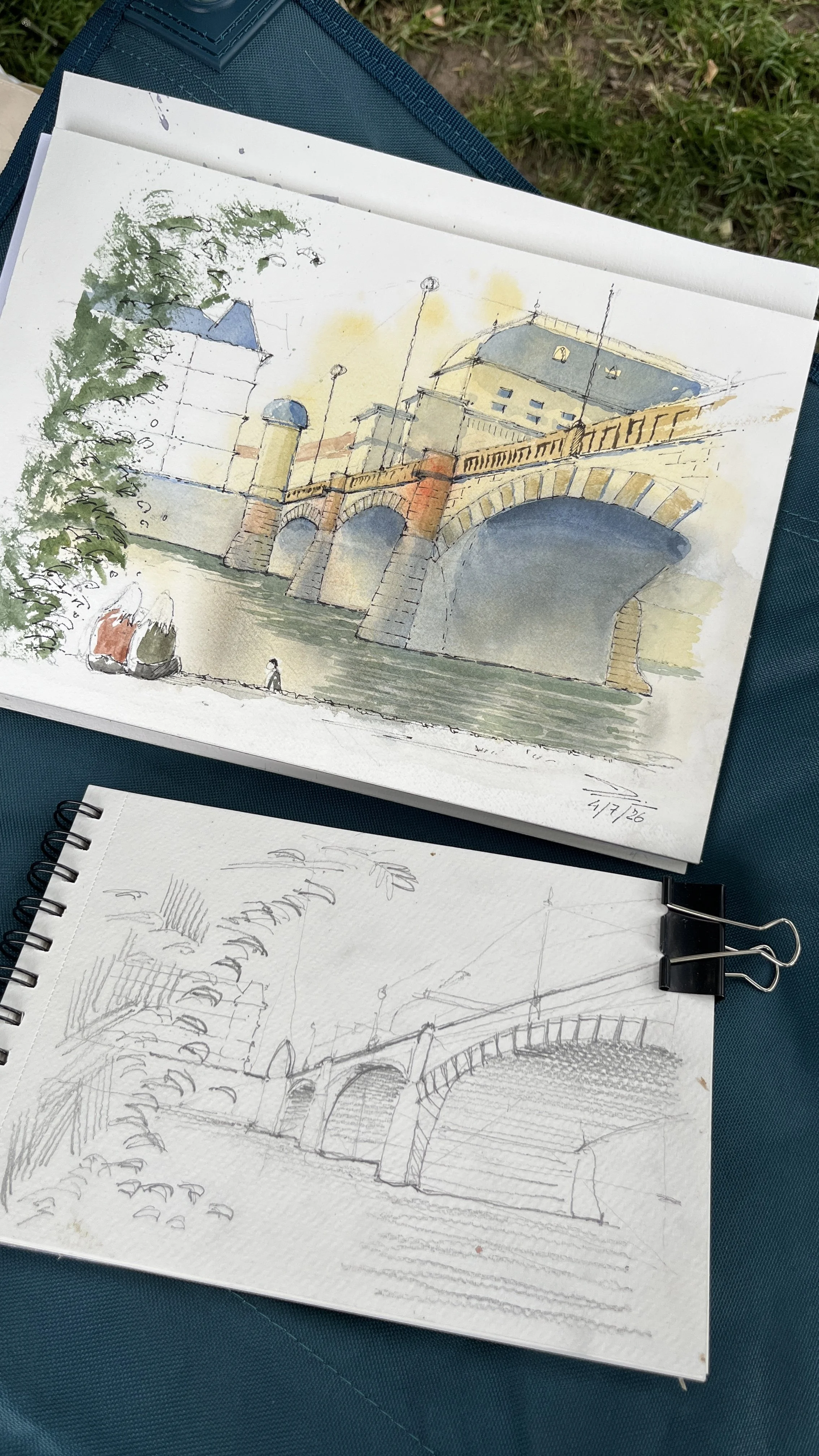
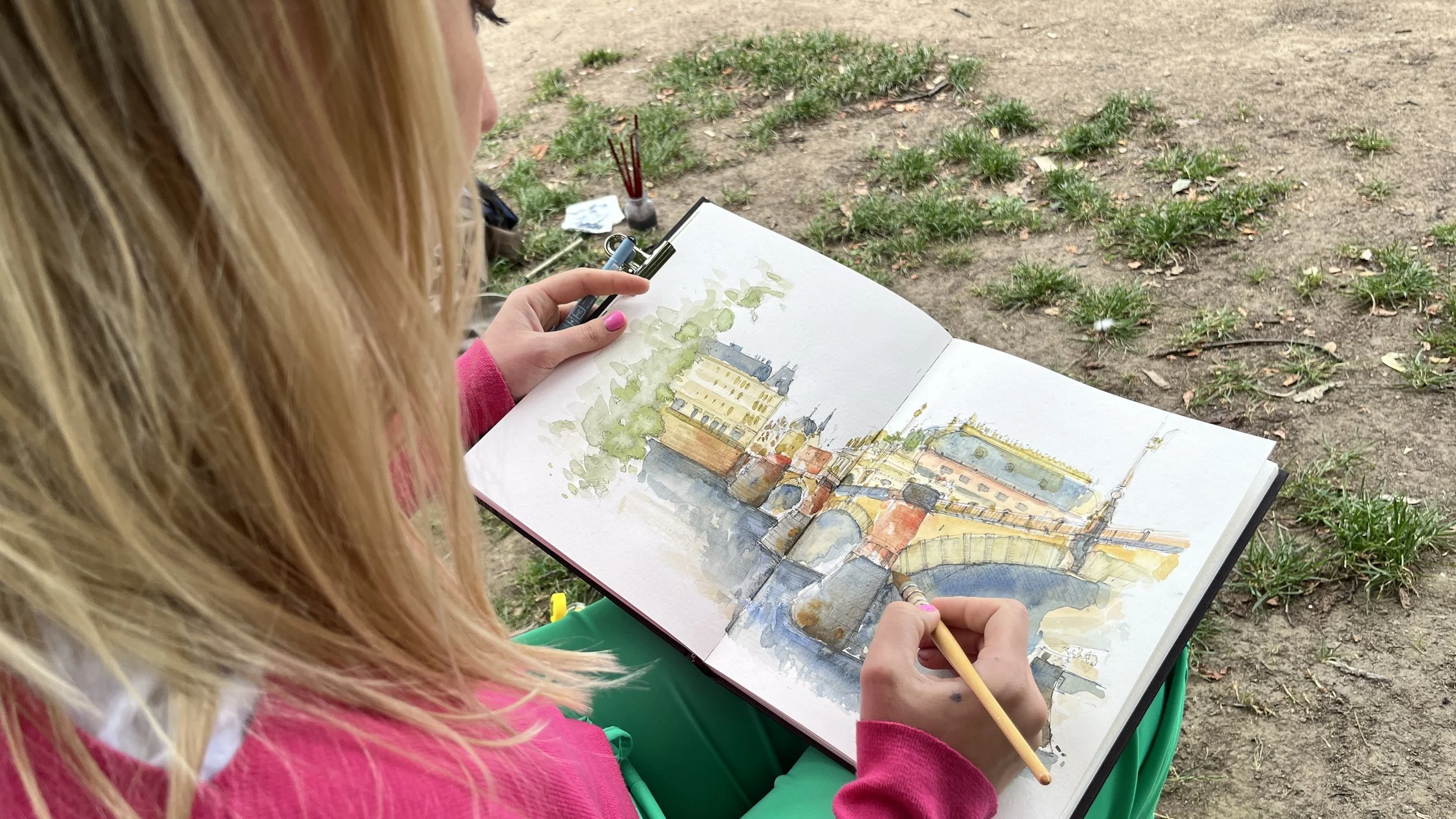
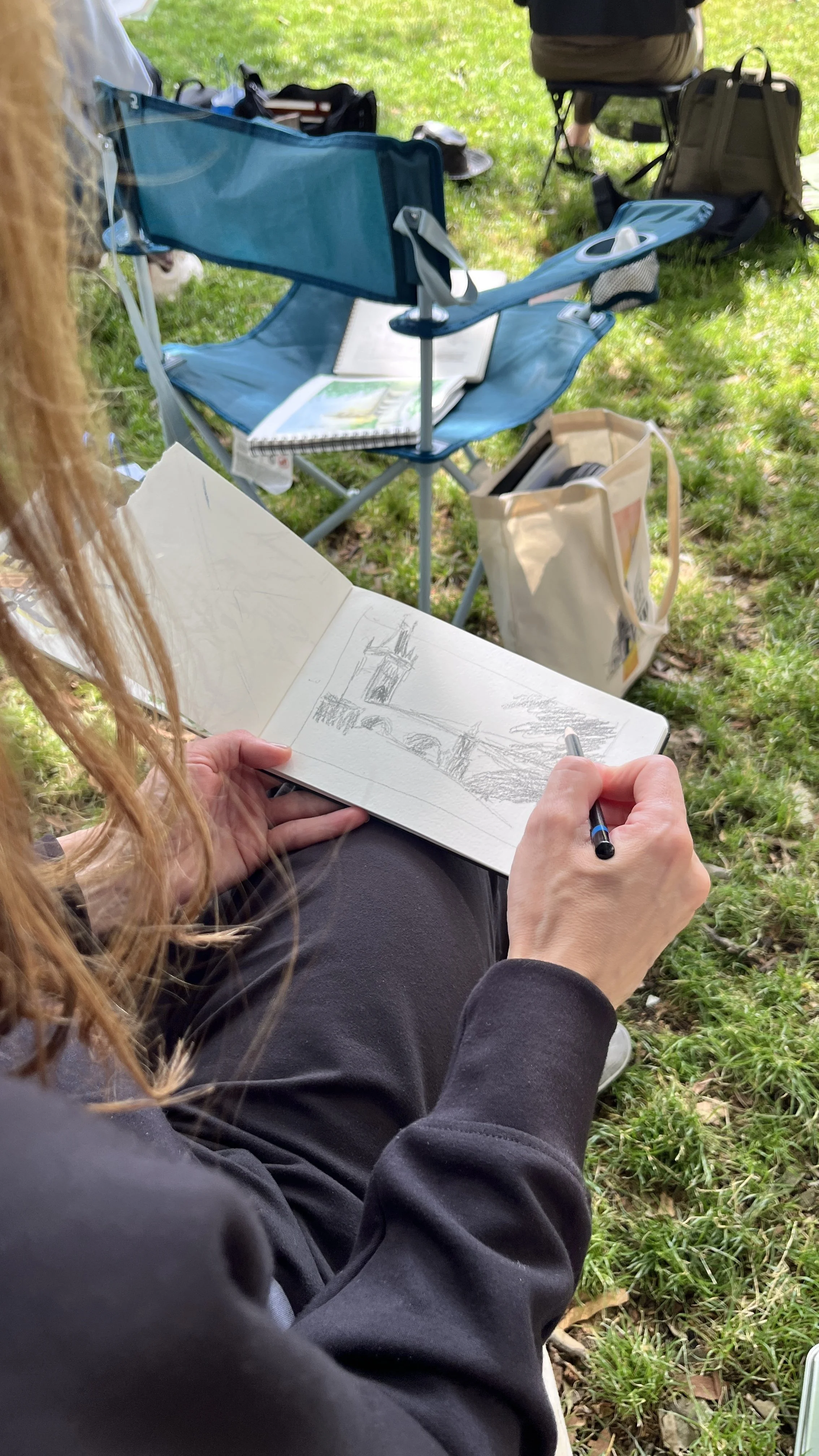
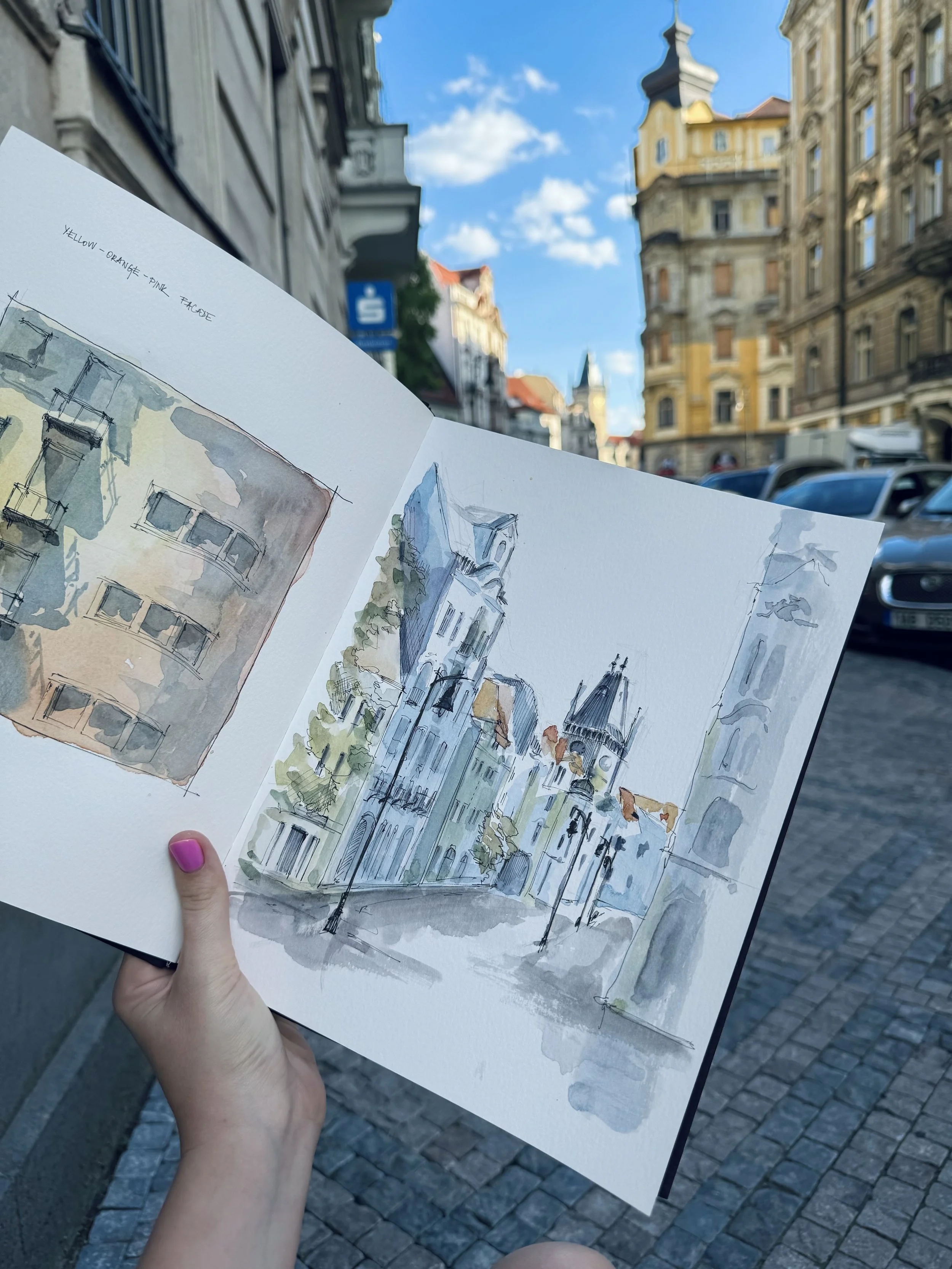
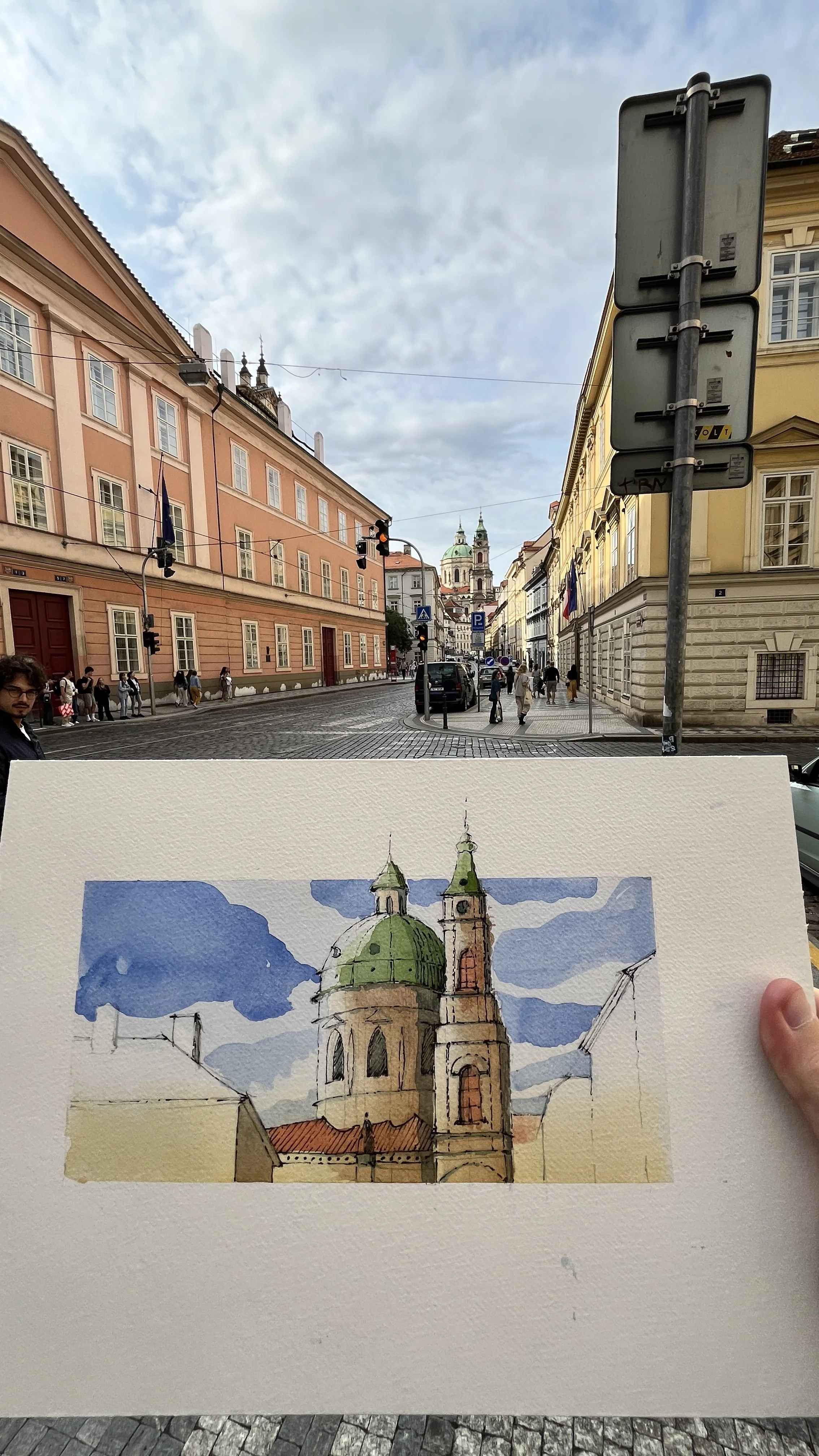
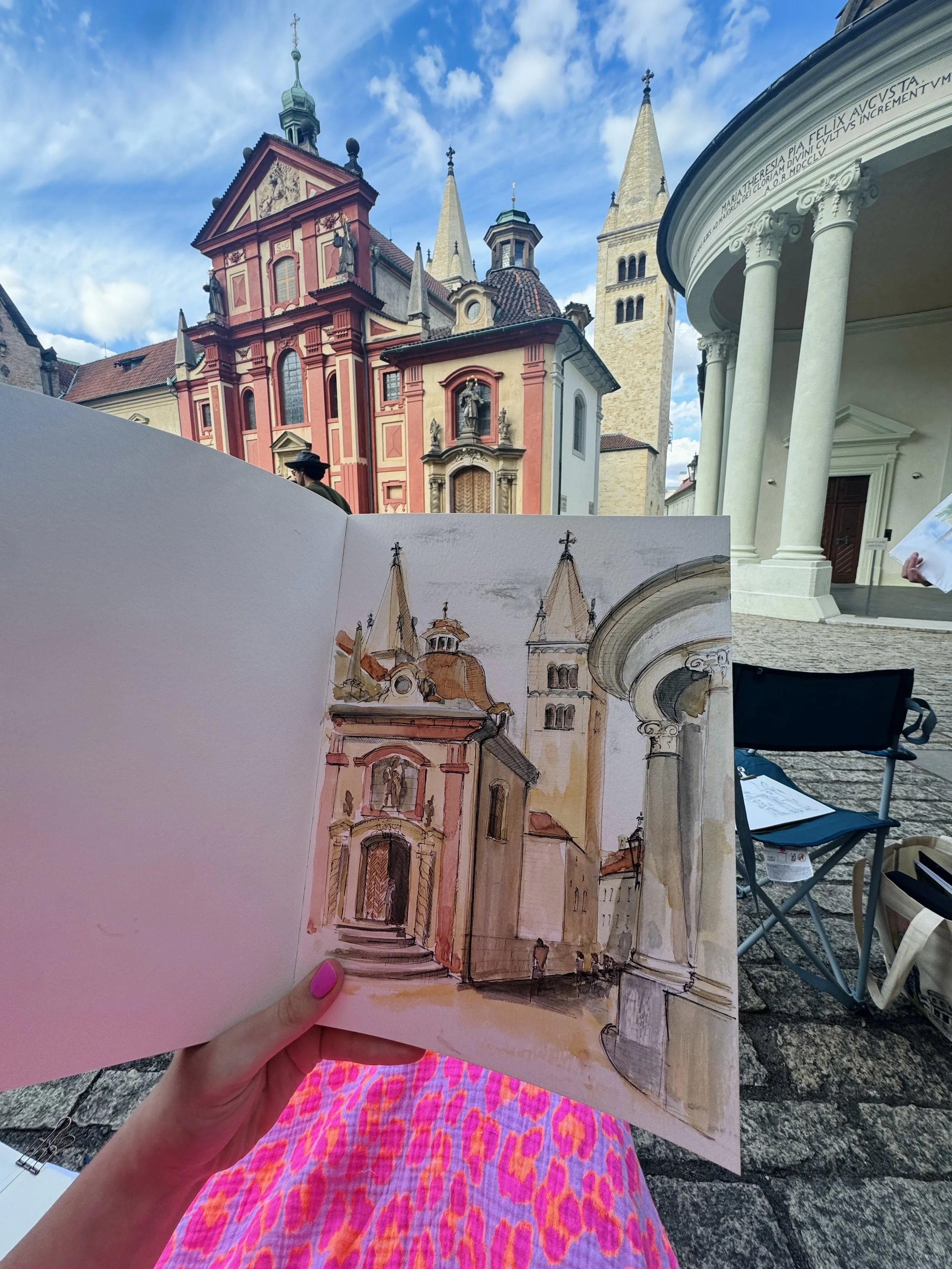
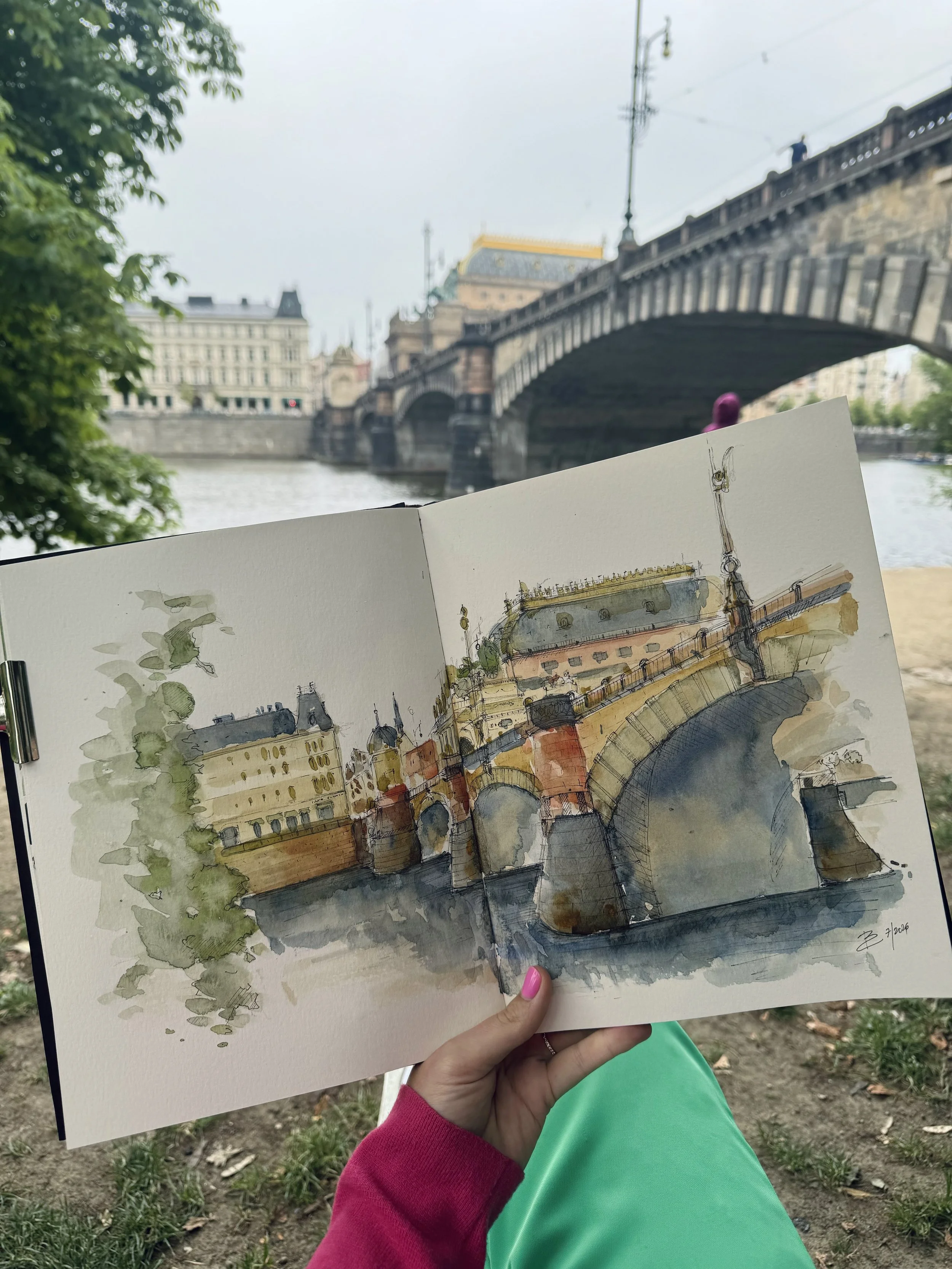
We sketched across Prague: Letná Park, the Old Town Square, Prague Castle, the riverbank by Legion Bridge, and the Charles Bridge from a small beach.
Here is how the week moved through the city:
A conference room: We started indoors with perspective and composition, so everyone had a base to build on.
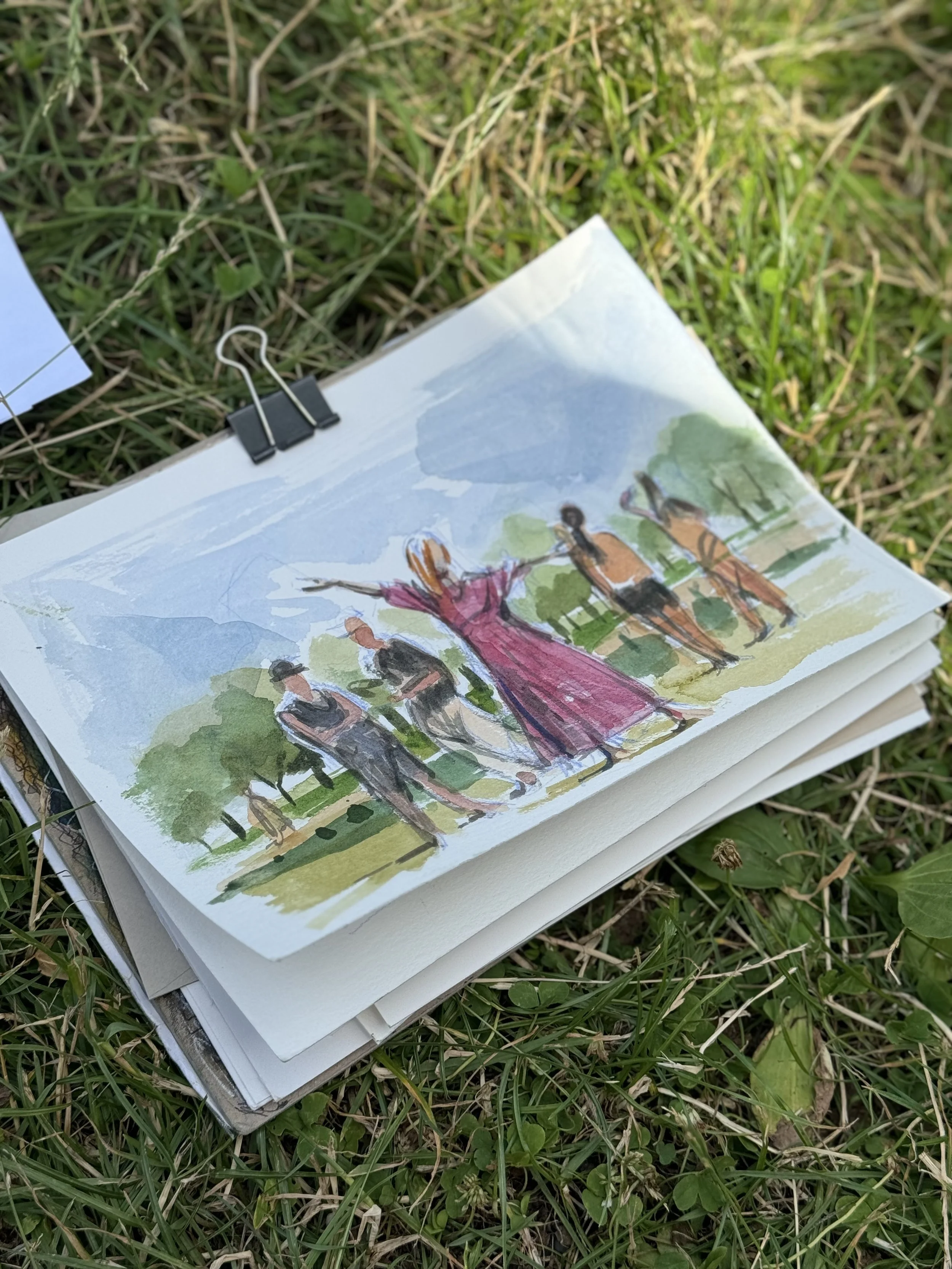
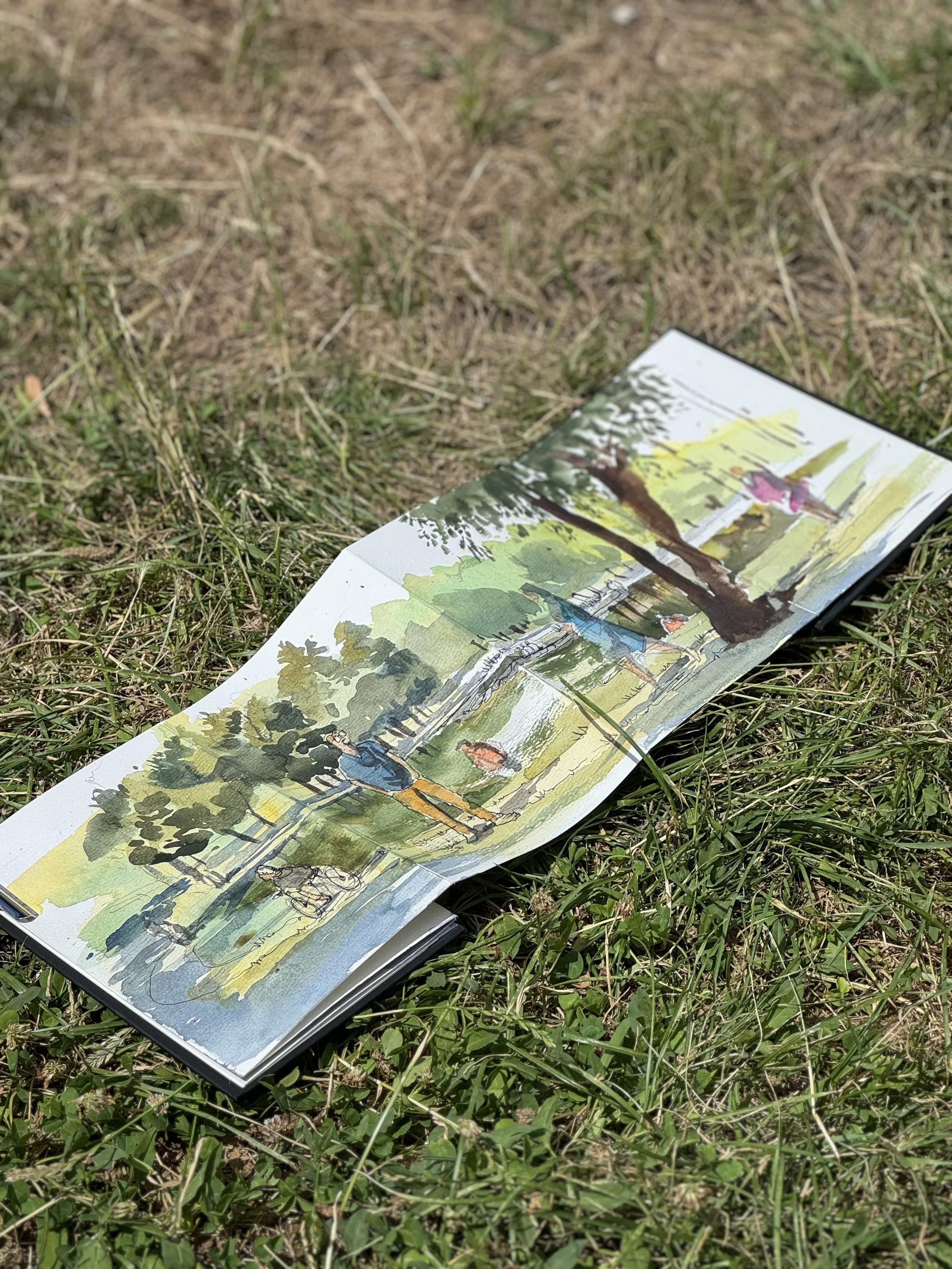
Letná Park: We drew the skyline spread out below us, and we practiced people.
The Old Town Square: We sketched in the middle of the buzz, with people all around.
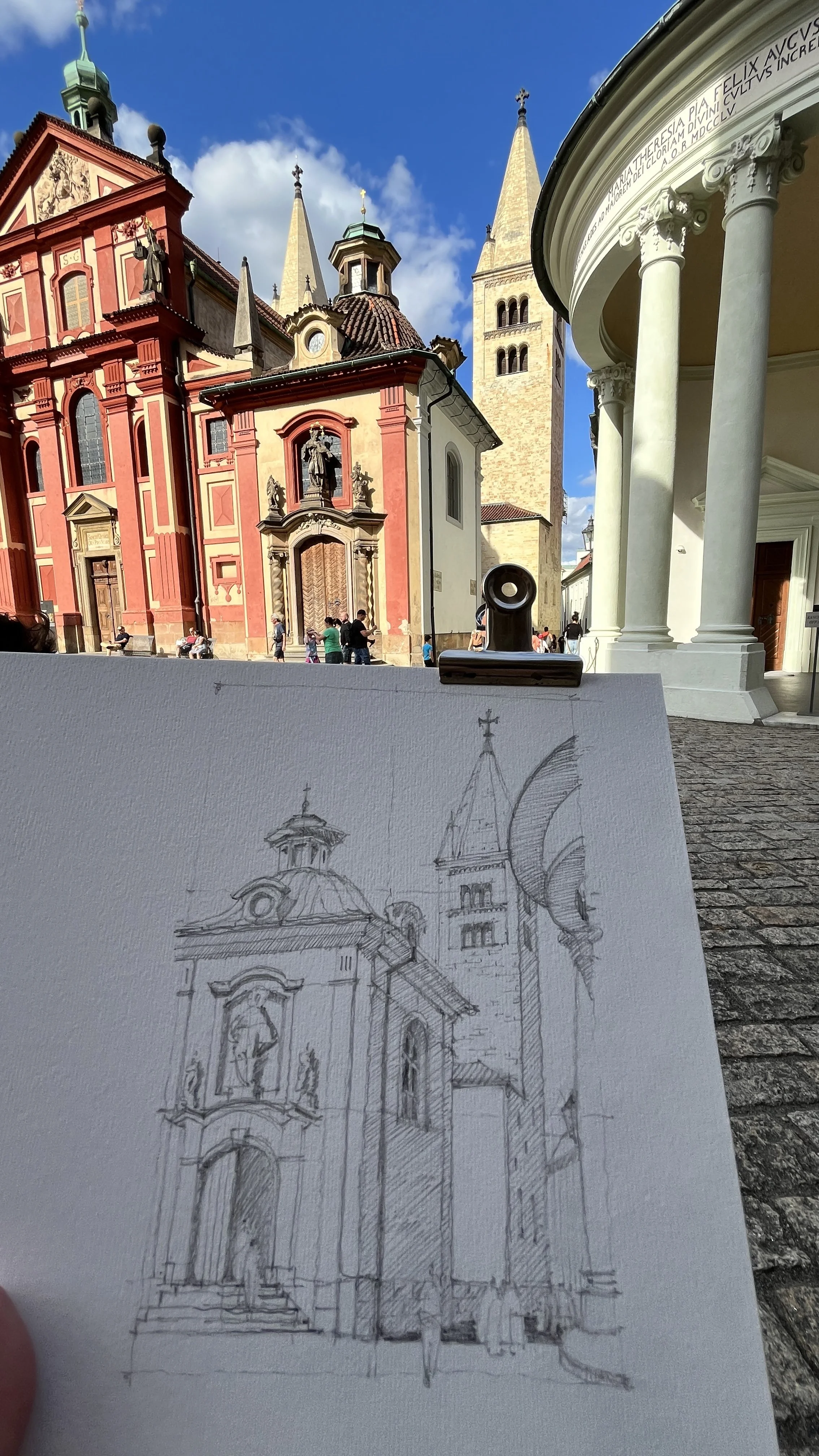
Prague Castle: We faced a big landmark and learned to break it into simple shapes.
The Legion Bridge riverbank: We sat under a tree and looked across the water toward the National Theatre.
An island in the Vltava: We made a calm little studio out of it.
The Charles Bridge: On the final day, we sat on a small beach by the river and drew the iconic bridge.
How did we learn to draw people in context?
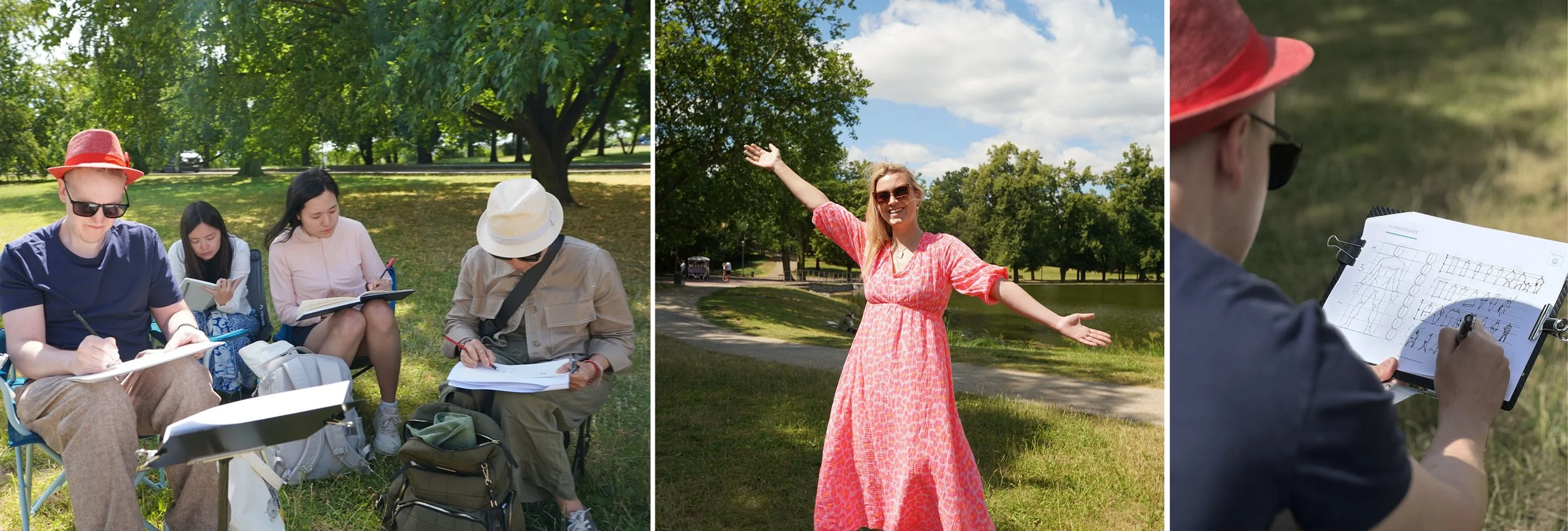
At Letná Park, everyone took a turn as the model for three minutes. The excuse "I can't draw people" disappeared in about an hour.
This was one of my favorite exercises of the week. Three minutes is short. You cannot chase detail. You block the big shape, you catch the pose, and you move on. Lines stay loose because there is no time to fuss.
We laughed a lot during that session. And by the end, people who arrived saying they avoid figures were adding them to every sketch. That is the whole point. People bring a scene to life and give it scale.
If figures are your sticking point too, my course Drawing People in Perspective shows you how to draw believable people without studying anatomy.
What happened when I stepped outside my comfort zone?
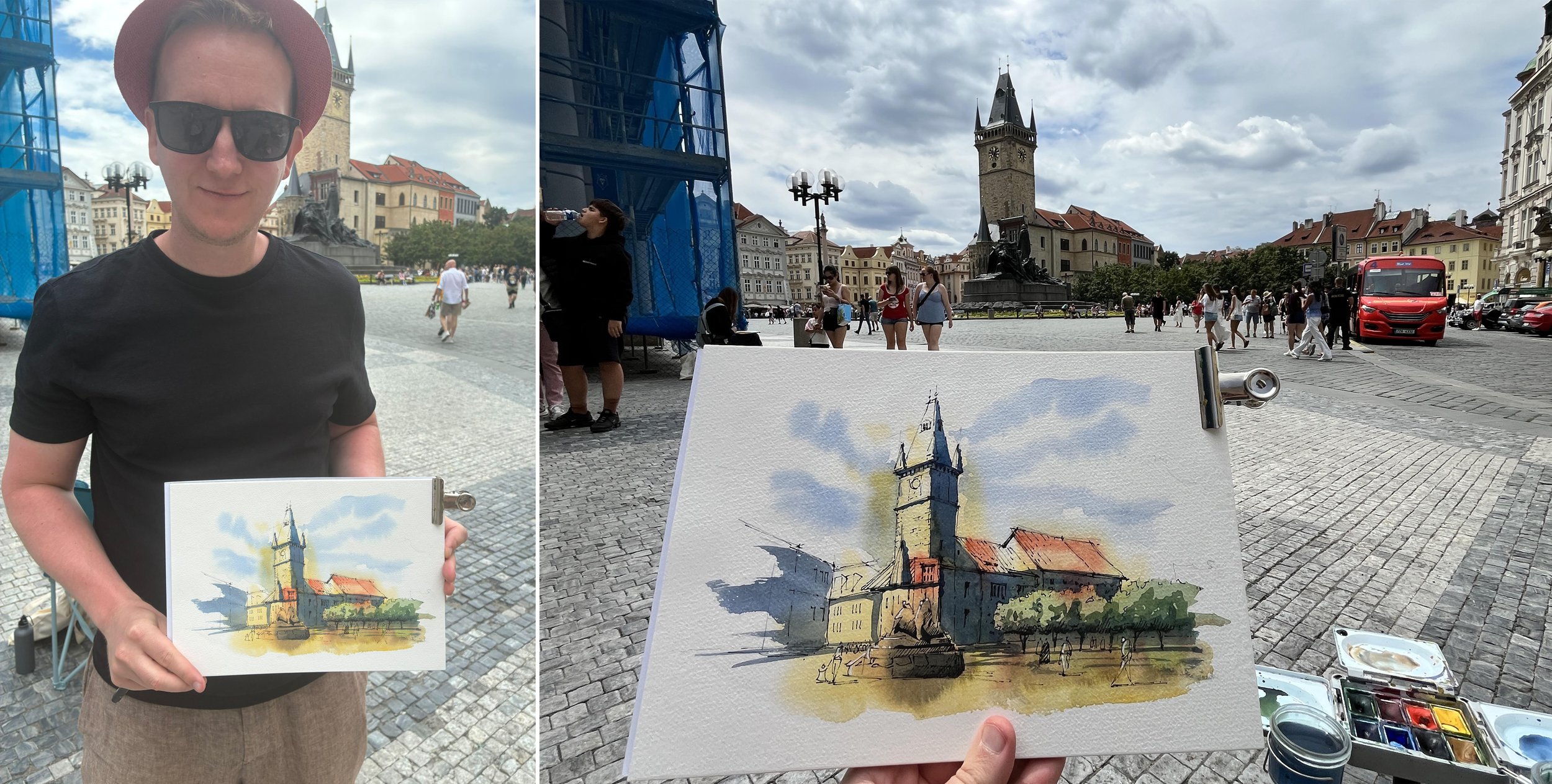
On day three in the Old Town Square, I went all in on watercolor. It is still a skill I am building. It worked, and it reminded me that teachers are learners too.
I want to be honest with you here. Watercolor is not my home turf. I teach line work and perspective. Paint still humbles me.
So in the middle of the square, with the group around me, I committed to it. Tourists stopped to watch. A few gave a compliment. A stranger even sat down and sketched with us for a while. You cannot plan a moment like that.
That is what on-location sketching does. It puts you in public, a little exposed, and it turns out that is where the growth lives.
What went wrong during the retreat?
A bird hit my sketchbook on the final day. Direct hit, on me and on the paper. The whole group saw it.
It was heavy enough that I almost dropped the sketchbook. The group called it the most memorable “texture technique” of the week.
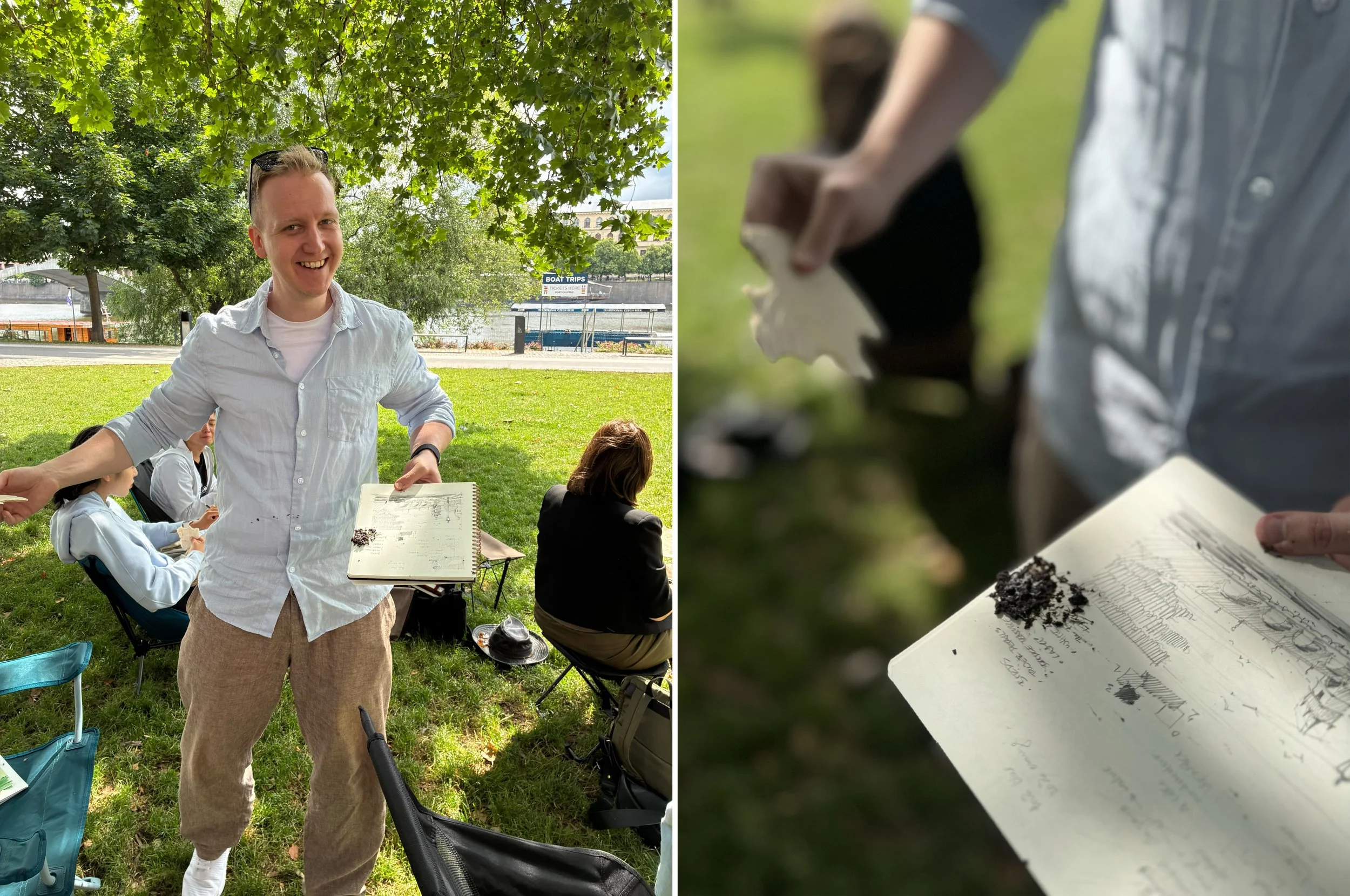
I share this on purpose. Outdoor sketching is messy. Rain comes. Wind lifts your pages. Crowds walk into your view. Birds do what birds do. None of it ruins a sketch. It makes a story you keep.
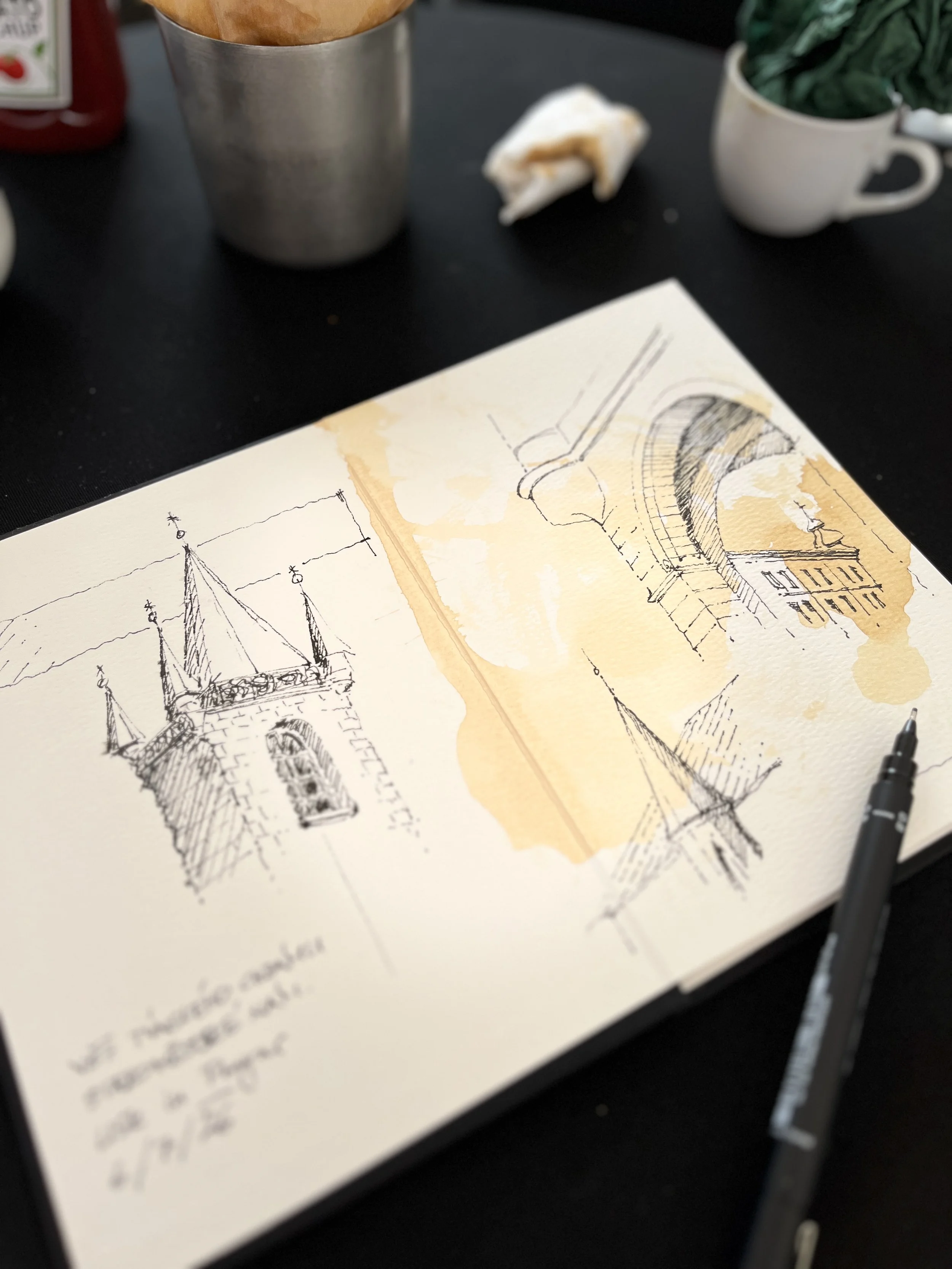
The coffee spill
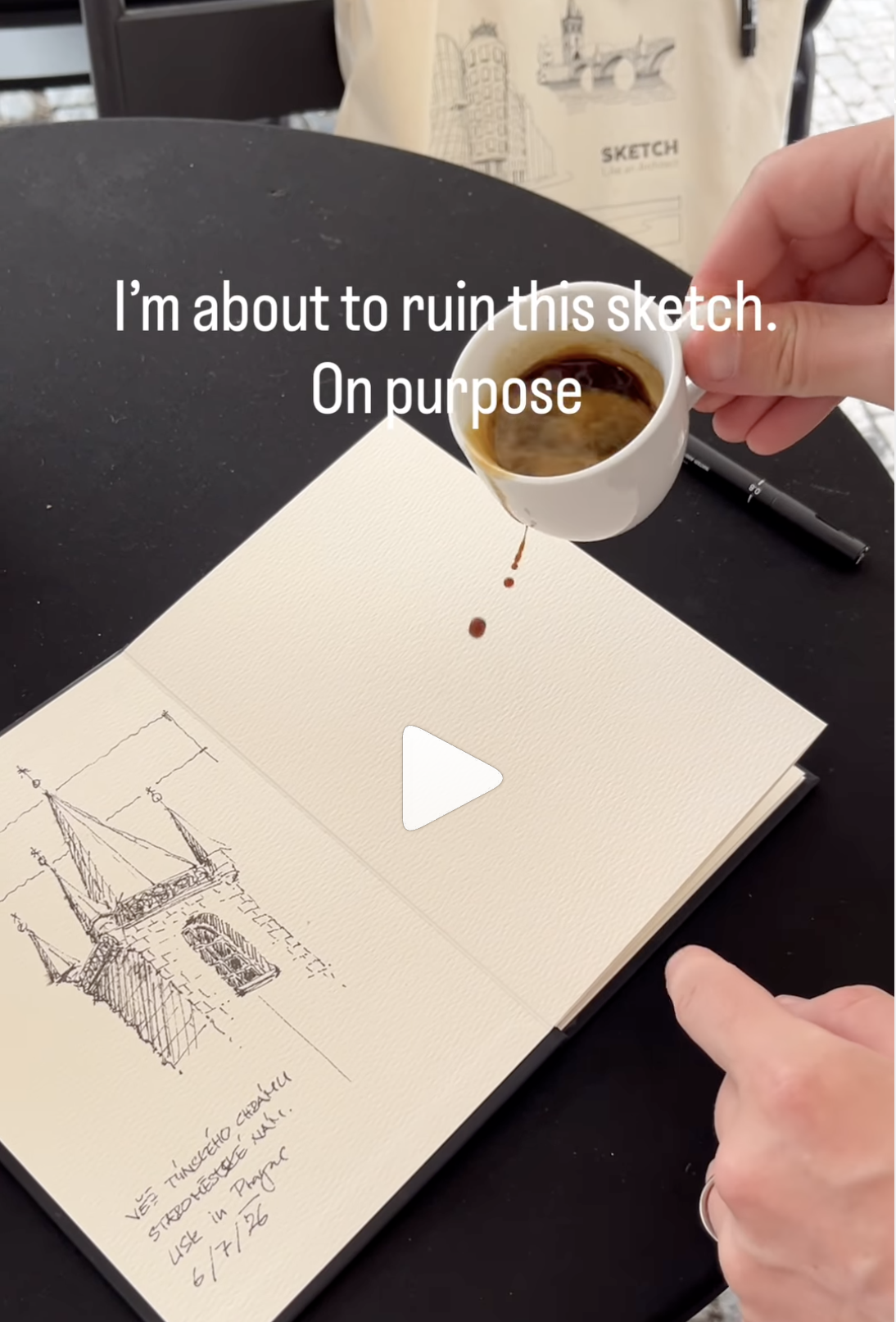
Then there was the coffee. On the last afternoon we made quick sketches around the Old Town Square, then sat down at a nearby cafe.
Having my espresso in one hand and sketchbook in the other, I remembered something I had seen online - painting with coffee. So we tried it.
And we filmed the whole thing. You can watch the short version on Instagram or on YouTube.
What did we practice during the five days?
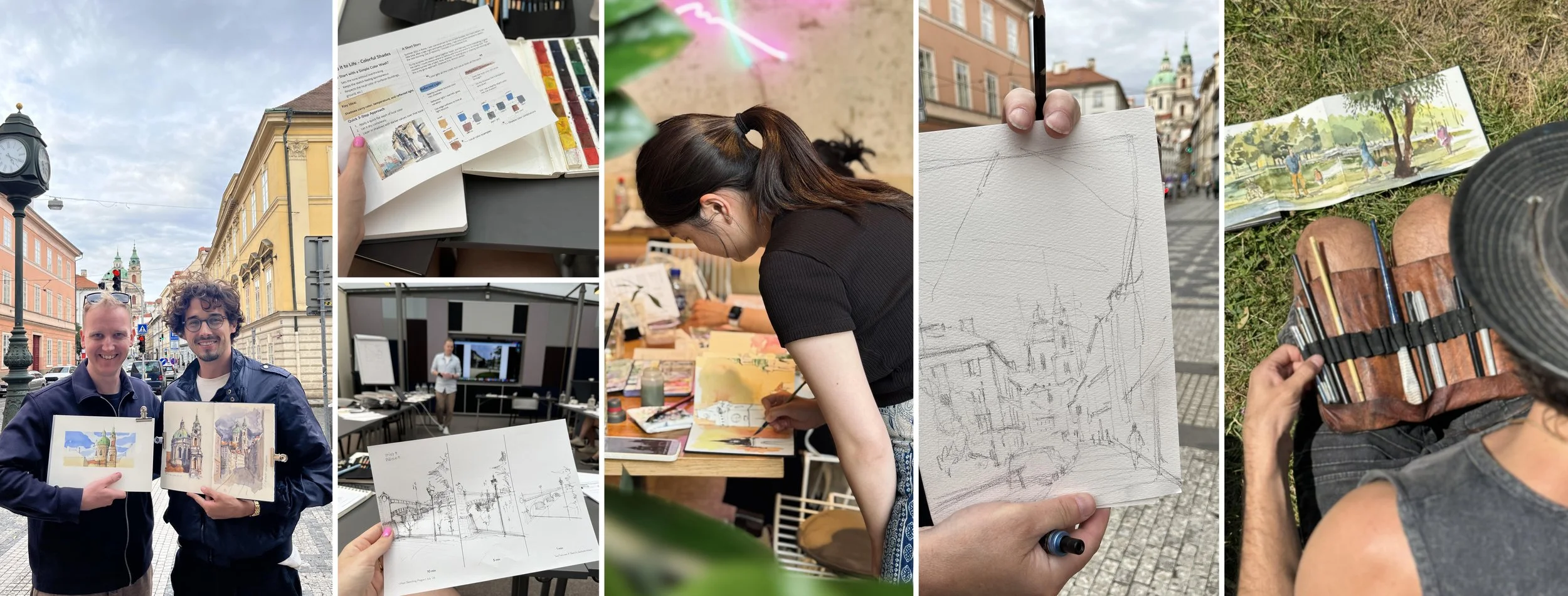
Over five days we practiced perspective, composition, drawing people in context, and watercolor, both indoors and out on location.
We kept it practical. Perspective gave our buildings depth. Composition helped us decide what to draw and what to leave out. Figures brought scenes to life. Watercolor added light and mood.
We also closed the week with a collaborative exercise. Everyone started a sketch, then passed it to the next person. Each drawing traveled through every pair of hands in the group. The results were far from perfect. We loved them anyway, because they belonged to all of us.
If perspective is your sticking point, my Perspective Drawing Made Easy workshop walks you through it one step at a time.
What surprised me most about the retreat?
The best moments actually happened between the sketches. Conversations on the walk to the next spot. A quiet coffee on a hidden patio. A shared laugh at dinner.
People did not come to Prague only to learn perspective drawing and watercolor. They came to step out of their daily lives and give themselves space. Some carried grief. Some wanted to find an old hobby they had set aside. Some just needed permission to focus on themselves for a few days. Every reason mattered.
There was no judgment in our group and no race to be the best. We shared. We asked questions. We cheered each other on.
By the middle of the week, something shifted. We stopped feeling like teachers and students. We became a small community. On the last night, we shared a farewell dinner in a warm little space. There was even a birthday croissant with a candle in it, put together on the spot.
Sketching brought us together. The connection, the deep talks, and the me-time without rushing are what everyone carried home.
How can you start urban sketching with more confidence?
You do not need talent to start urban sketching. Pick one spot, keep your lines loose, and draw often. Confidence grows with practice.
Here are six simple steps to begin:
Start small. Pick one bench, one tree, or one corner. You do not need the whole skyline.
Block the big shapes first. Get the large forms down before any detail.
Keep your lines loose. Fast, light lines feel alive. Stiff, careful lines feel tense.
Set a timer. Give yourself three minutes. Speed keeps you from fussing.
Add a person or two. They bring the scene to life and show scale.
Find a kind group. Sharing your work with supportive people builds confidence fast.
When you are ready for a full path from first lines to finished perspective, my course Sketch Like an Architect – Step-by-Step From Lines to Perspective takes you there at your own pace.
Can you experience this without flying to Prague?
Yes, and I am working on it. I am planning an online course called Urban Sketching Like an Architect: Exploring Prague, built on what we practiced during our retreats.
The idea is simple. Real locations. Free-hand perspective tricks. Watercolor techniques. Live demos. And a supportive online community where you share your work and get feedback.
It is still in planning, so I want your input first. If this sounds like something you would enjoy, fill out this short survey. It takes about three minutes. Your answers will shape the course into something you actually want.
Frequently asked questions about urban sketching retreats
Do I need to be good at drawing to join a sketching retreat? No. Retreats welcome all levels. You learn on location with support, and beginners often grow the fastest because they draw with fresh eyes.
What should I bring to an urban sketching retreat? Bring a small sketchbook, a few pens or pencils, a light watercolor set, and a folding stool. Keep your kit small so you can walk and draw with ease.
Is urban sketching hard for beginners? It feels hard at first, then gets easier fast. Start with simple shapes and short sessions. Skill is built through practice, not born as talent.
How many people join an urban sketching retreat? Ours stays small. We hosted groups from nine to fourteen sketchers and two instructors, so everyone gets feedback and no one gets lost in a crowd.
Will there be another Prague sketching retreat? I hope to host more. In the meantime, I am building an online version. Share your thoughts in the survey and you will be first to hear.
A last thought
This week taught me something I want to hold onto. What makes a retreat like this powerful is not the perfect sketch. It is the human connection and the space we give people to grow. Everyone left more confident and inspired, and so did I.
I want to keep exploring urban sketching and sharing the journey with you. If this feels like your kind of thing, come along. Grab one of the free guides above, keep your sketchbook close, and follow my work. The next page is always waiting.
Happy sketching,
David
#SketchLikeAnArchitect
